Infinitives with and without 'to'
Sometimes, after certain verbs, we use the base form of another verb without 'to'. This is called a bare infinitive. It's like saying 'I can go' instead of 'I can to go'.
Other times, after different verbs, we use 'to' before the base form of the verb. This is called a to-infinitive. For example, we say 'I want to eat' not 'I want eat'.
- Use bare infinitives after modal verbs (can, must, should, etc.).
- Use bare infinitives after 'make' and 'let' when talking about causing or allowing something.
- Use to-infinitives after many common verbs (want, need, decide, plan, etc.).
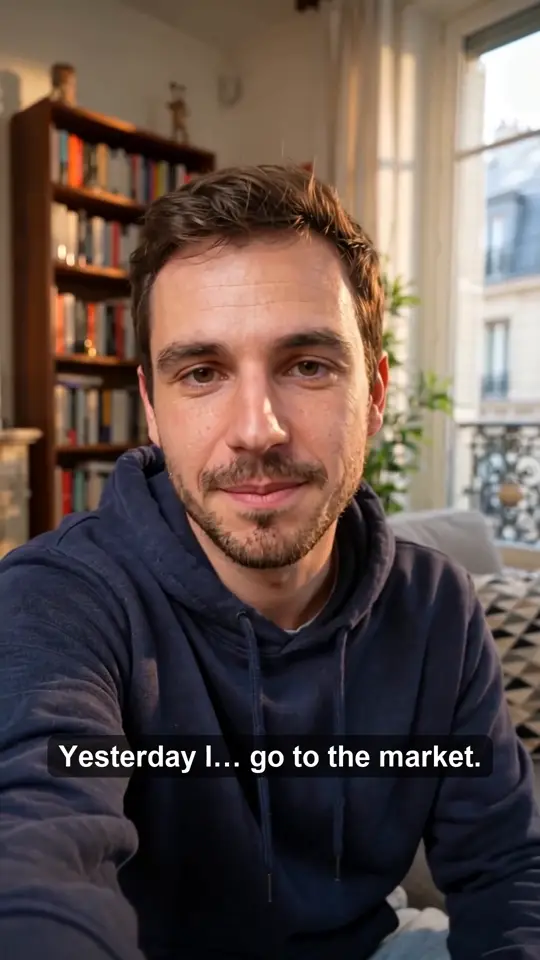
Examples
- She can speak three languages.
- Let me help you with that box.
- I want to learn French.
- They decided to buy a new car.
What you can do at B1
“Infinitives with and without 'to'” is part of the B1 syllabus. B1 is the independent-user threshold: you cope with most travel and everyday situations.
- Reading: understand texts in everyday and work-related language.
- Listening: follow the main points of talks and broadcasts on familiar topics.
- Writing: produce connected text about your experiences and plans.
- Speaking: describe events, give reasons for opinions and hold a conversation.
More B1 grammar topics
Study together with “Infinitives with and without 'to'”:
- Verbs followed by gerunds or infinitives (e.g., enjoy, want) (B1) · Verbs
- Present Simple for habits and facts (B1) · Verbs
- Verbs – Present Continuous for actions now and future arrangements
- Past Simple for completed actions (B1) · Verbs
- Past Continuous for ongoing past actions · Verbs
- Present Perfect Simple for experiences and unfinished past actions (B1) · Verbs
- Verbs – Present Perfect Simple vs. Past Simple
- Future Simple (will/won't) for predictions and spontaneous decisions (B1) · Verbs
- be going to for plans and predictions with evidence (B1) · Verbs
- Present Continuous for future arrangements · Verbs
- can/could for ability and possibility · Verbs
- should/shouldn't for advice (B1) · Verbs
Previous topic: may/might for possibility. Next topic: Gerunds (-ing forms) as subjects and after prepositions.
In the exam: where this point is assessed (B1)
Grammatical accuracy is marked in both writing and speaking: you will use “Infinitives with and without 'to'” in these B1 papers.
It also counts in these other certificates: IELTS Academic: sections and scoring (model answers for the IELTS Academic B1 writing paper), IELTS General: format, levels and preparation.
Not sure you are at B1 yet? check your level online.
To practise with guided B1 lessons: free B1 course.
Practise with free interactive exercises and keep track of your weak points (free account).
Do the free exercises