Learn workplace German by playing
German for childcare: play your first days in a German nursery
Learn childcare German by playing. You live a day in a nursery group, from morning drop-off to collection time, choose what to say to children, parents and your group lead, speak when it is your turn, and unlock the next day by finishing the one before.
Free with an account. Only live speaking scenes with a character in the app use credits.
Learn by playing: how the game works
You do not read lessons about childcare, you live the day. Progress only comes from what you actually play.
Explore the workplace
Move between the cloakroom, the group room and the washroom, and tick off the objectives of the day one by one.
Choose your reply
At each moment you pick what to say or do. Characters react immediately, and a short explanation tells you why a reply works or not.
Trust and evaluation
Two gauges follow your choices: the trust of the parent, and the evaluation of your group lead. Good reflexes in a row earn a compliment.
Speak when it is your turn
Some scenes ask you to speak: introduce yourself, comfort a child, tell a parent about the day. Live scenes with an in-app character use credits.
A real day clock
The day runs from drop-off to collection time, with unexpected events: a crying child, an important message from a parent, a small accident.
Stars and the next day
Finish the day to earn up to three stars and see the words you learned. The next day unlocks only when the previous one is done.
Scenes from the childcare placement
Real scenes from the first day, with the German line you hear in the game and its translation.
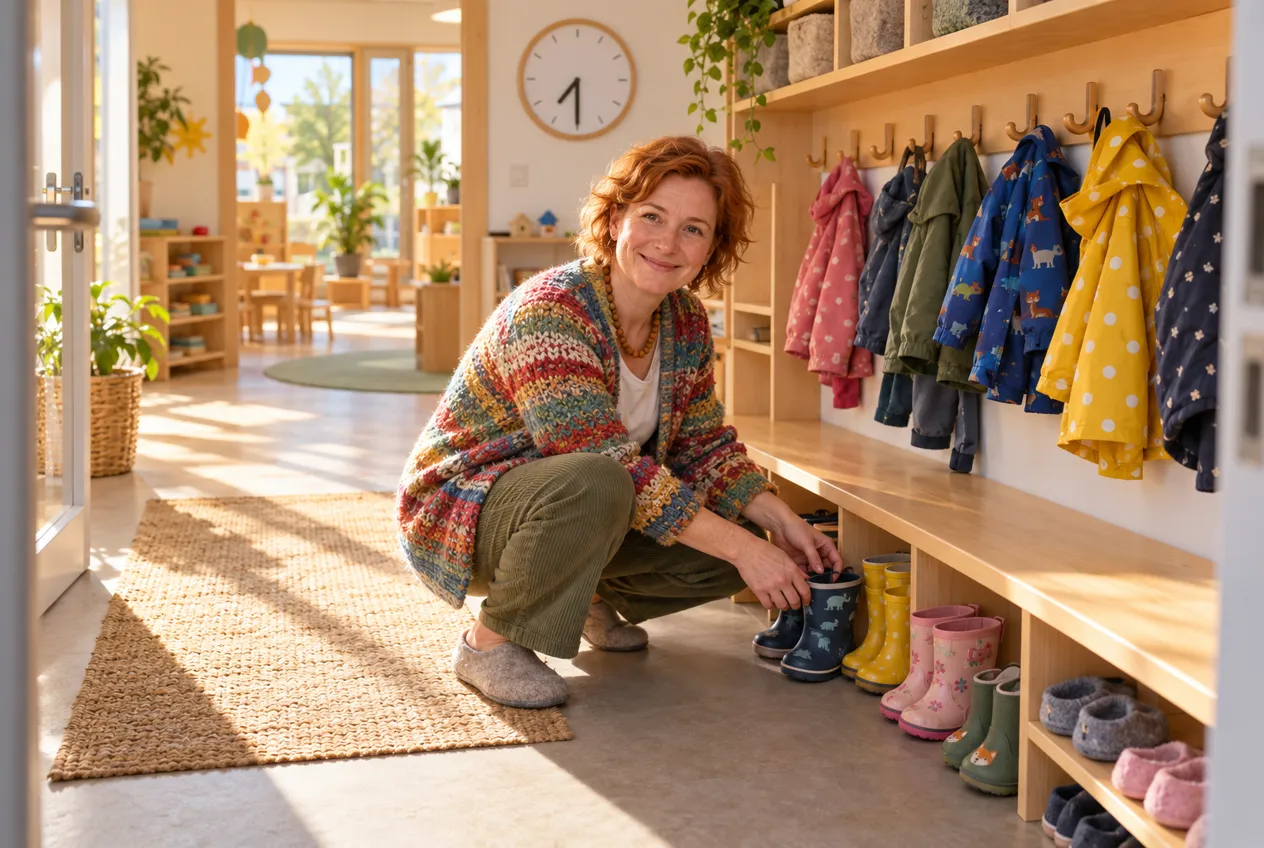
Petraeducator and group lead Du bist bei mir in der Igelgruppe.
You're with me in the Hedgehog group.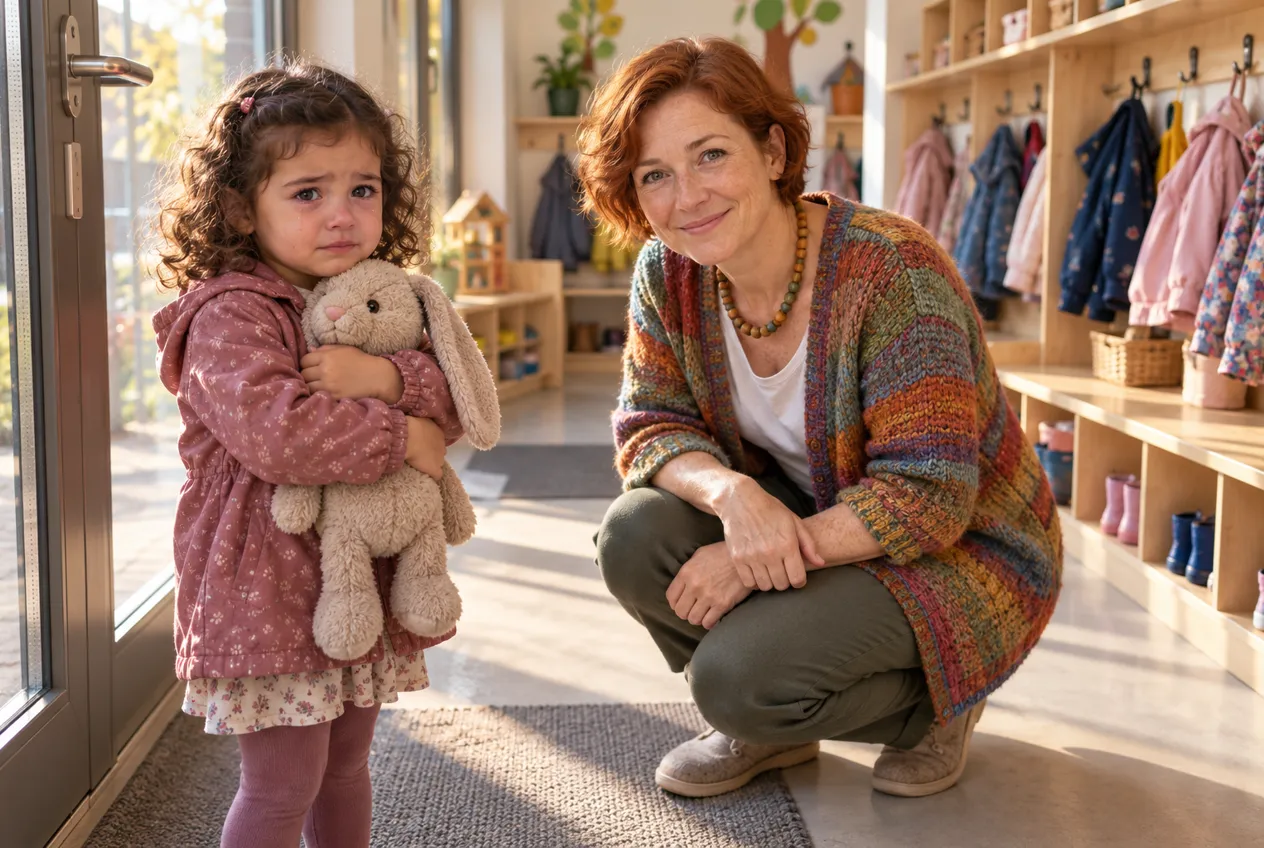
Petraeducator and group lead Geh am besten in die Hocke, dann bist du so groß wie sie.
Best crouch down, then you're as tall as she is.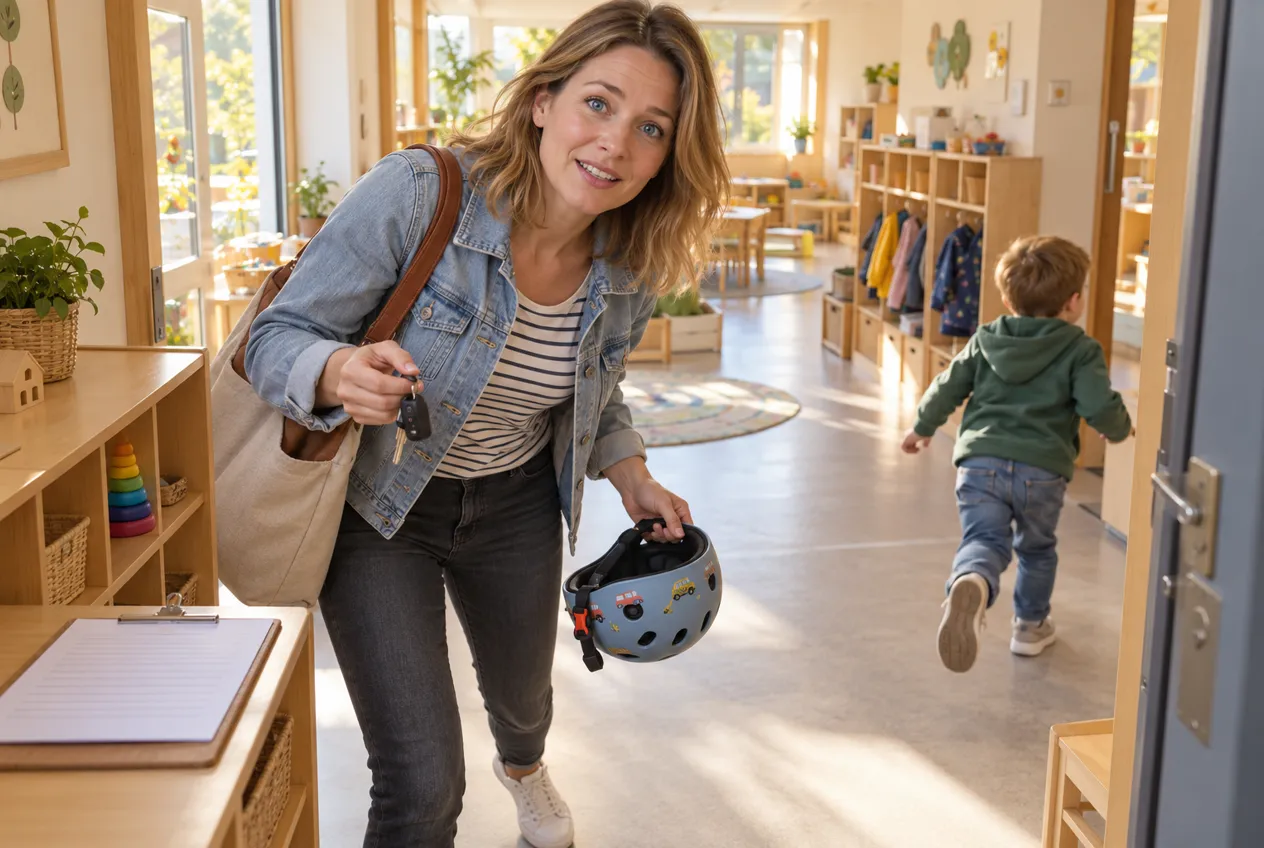
Frau Krügermother of a child in the group Noah hat eine Nussallergie.
Noah has a nut allergy.
Petraeducator and group lead Guten Morgen, liebe Igel!
Good morning, dear Hedgehogs!
What you play in the childcare placement
Every situation comes from the placement itself: a nursery, a group of three-year-olds, a team and parents who come back from week to week.
First morning in the group
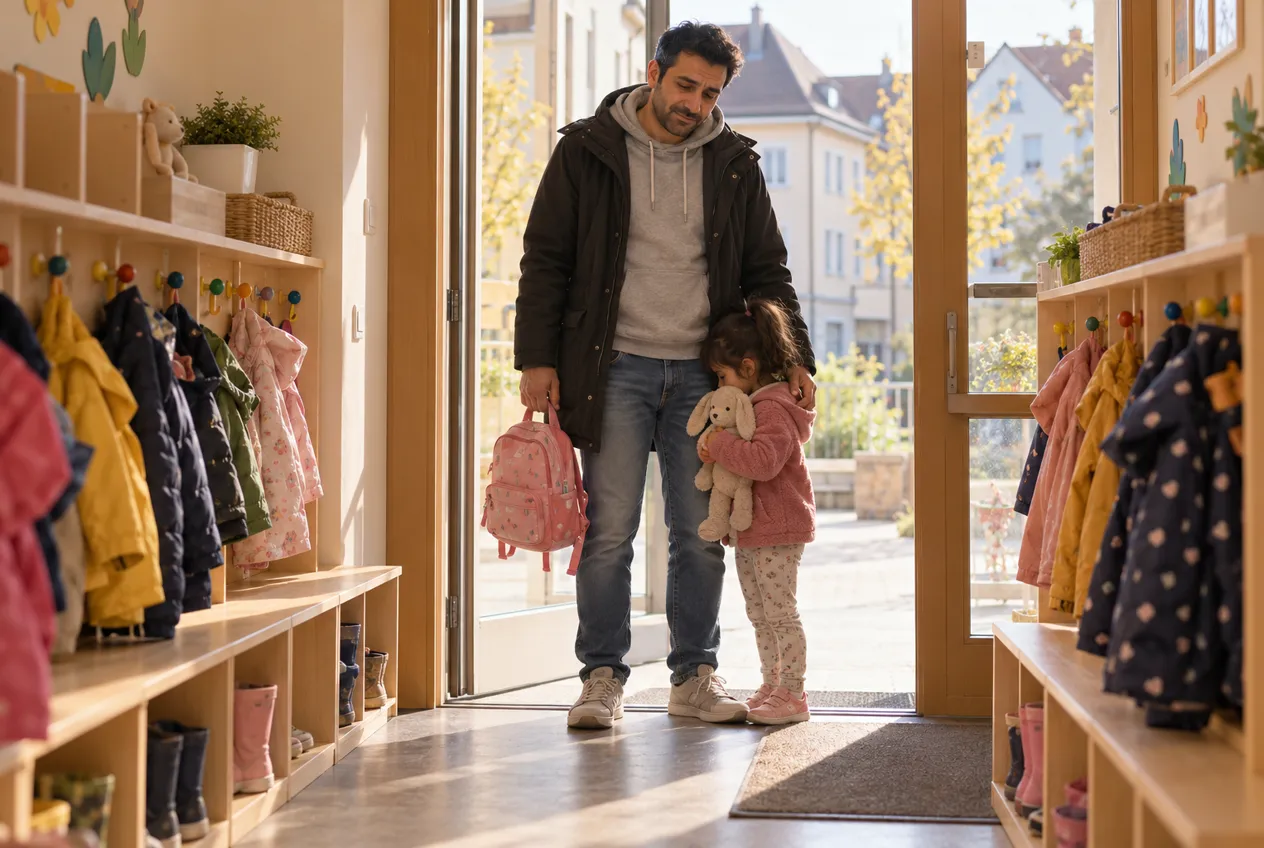
You arrive before eight, put on your slippers, meet your group lead and the first children and parents at drop-off, and comfort a little girl who does not want her father to leave.
Hygiene and supervision
Handwashing and nappy changing with gloves in the washroom, then supervision in the garden: count the children, close the gate, watch the slide.
The daily routine
Helping to lead the morning circle, free play, tidying up and the transitions between activities, then a father's request about his daughter's nap.
Talking with parents
A quick chat at collection time about how the day went, and a mother who is upset because her son came home wet and dirty.
Observing and documenting
During the quiet time, writing up an observation from free play: describe what you saw, without judging the child.
Conflicts and small accidents
A child who was bitten, a parent who is angry, privacy rules to respect; then a fall from the climbing frame and a calm phone call to the father.
Childcare in Germany: why the language matters
In German nurseries, language is at the heart of the work: you comfort and guide children, talk to parents every morning and afternoon, and write down what you observe. Requirements depend on the employer, the federal state and the recognition of your qualifications, so always check the official conditions for your situation.
- You speak with young children in simple, warm German, and with parents in polite, precise German
- Safety and supervision rules matter: who may collect a child, allergies, counting the group
- Observation notes and short reports are part of the daily routine
- Educator roles often require recognised qualifications; training places (Ausbildung) can be a way in, depending on your profile
Job titles in German
The titles stay in German, as you will read them in job ads.
- Erzieher/in
- Kinderpfleger/in
- Sozialassistent/in
Childcare vocabulary you practise
The words come back in dialogues, documents and vocabulary podcasts, with their translation in the help language.
The nursery and the group
die Kitadie Gruppedie Garderobeder Gruppenraumdie Abholliste
Hygiene
das Händewaschendie Seifeder Wickeltischwickelndie Windel
Supervision and safety
die Aufsichtzählendas Toraufpassendie Aufsichtspflicht
The daily routine
der Tagesablaufdas Freispieldas Ritualder Mittagsschlafaufräumen
Talking with parents
abholendas Elterngesprächdie WechselkleidungBescheid sagendas Verständnis
Observing and comforting
die Beobachtungder Beobachtungsbogendas Portfoliotröstendas Kühlpack
Your path: 7 weeks from A2 to B2
Each week is a theme of the placement. Recommended start: B1; with A2 you can begin, the first weeks are more guided.
- Week 1First day at the nurseryA2
- Week 2Supervision, hygiene and safetyA2
- Week 3The daily routine with childrenB1
- Week 4Talking with parentsB1
- Week 5Observing and documentingB1
- Week 6Conflicts, accidents and comfortingB2
- Week 7End-of-placement reviewB2
A learning game, not a real placement
The Praktikum trains the language of the job. It does not replace a placement in a nursery.
- No internship agreement and no pay
- No placement with an employer and no job promise
- No help with visas or recognition of qualifications
- The nursery, colleagues, children and parents are fictional
Frequently asked questions
Is this a real placement in a German nursery?
No. It is a game for learning the German of childcare. There is no contract, no pay, no placement with an employer and no visa support.
What level of German do I need to start?
B1 is the recommended start. With A2 you can begin: the first weeks are more guided. The last weeks aim at B2, with conflicts, accidents and difficult talks with parents.
How much does it cost?
The Praktikum is free for anyone with an account. Only live speaking scenes with a character in the app use credits.
Does it prepare me for a German exam for work?
It trains similar situations: talking with parents, reporting an incident, writing short notes. It does not replace practice for the exact format of telc Deutsch B1·B2 Beruf or the Deutsch-Test für den Beruf (DTB).
In which languages are the help and translations?
The placement is played in German. Help and translations are shown in English or French.
Keep going
Your first morning in the nursery is waiting
Create your trainee, step into the group room and play your first day in German.
Play the childcare placement