Learn workplace German by playing
German for hospitality: play your first shifts in a German hotel
Learn hospitality German by playing. You live a workday in a hotel kitchen, the restaurant and at reception, choose what to say to the head chef, guests and colleagues, speak when it is your turn, and unlock the next day by finishing the one before.
Free with an account. Only live speaking scenes with a character in the app use credits.
Learn by playing: how the game works
You do not read lessons about hospitality, you live the shift. Progress only comes from what you actually play.
Explore the workplace
Move between the staff entrance, the changing room, the kitchen and the dining room, and tick off the objectives of the day one by one.
Choose your reply
At each moment you pick what to say or do. Characters react immediately, and a short explanation tells you why a reply works or not.
Trust and evaluation
Two gauges follow your choices: the trust of the guest you are serving, and the evaluation of your head chef or restaurant manager. Good reflexes in a row earn a compliment.
Speak when it is your turn
Some scenes ask you to speak: introduce yourself, confirm an order, recommend a dish. Live scenes with an in-app character use credits.
A real shift clock
The day runs from the early shift to the end of service, with unexpected events: a missing hairnet, an urgent order, a guest who cannot wait.
Stars and the next day
Finish the day to earn up to three stars and see the words you learned. The next day unlocks only when the previous one is done.
Scenes from the hospitality placement
Real scenes from the first day, with the German line you hear in the game and its translation.
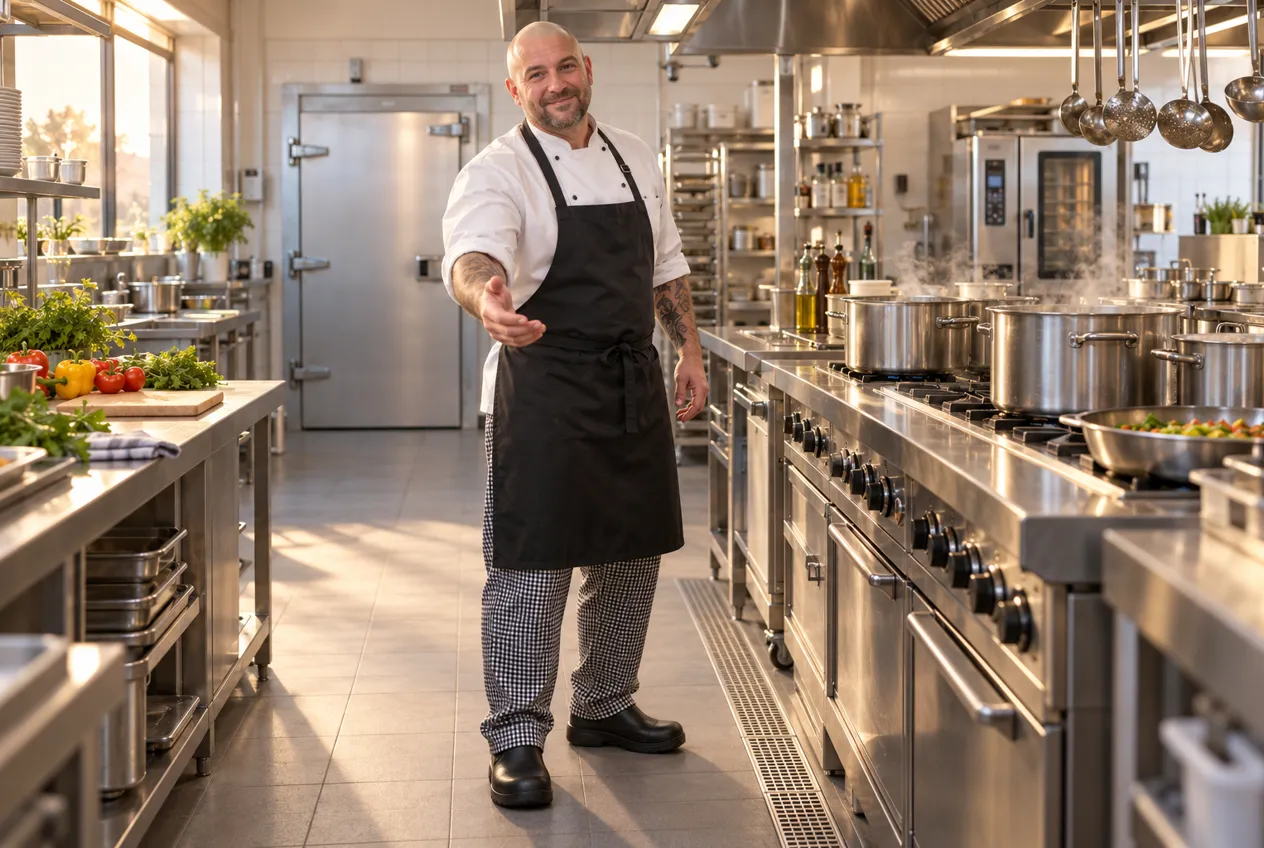
Stefanhead chef Ich bin Stefan, der Küchenchef.
I'm Stefan, the head chef.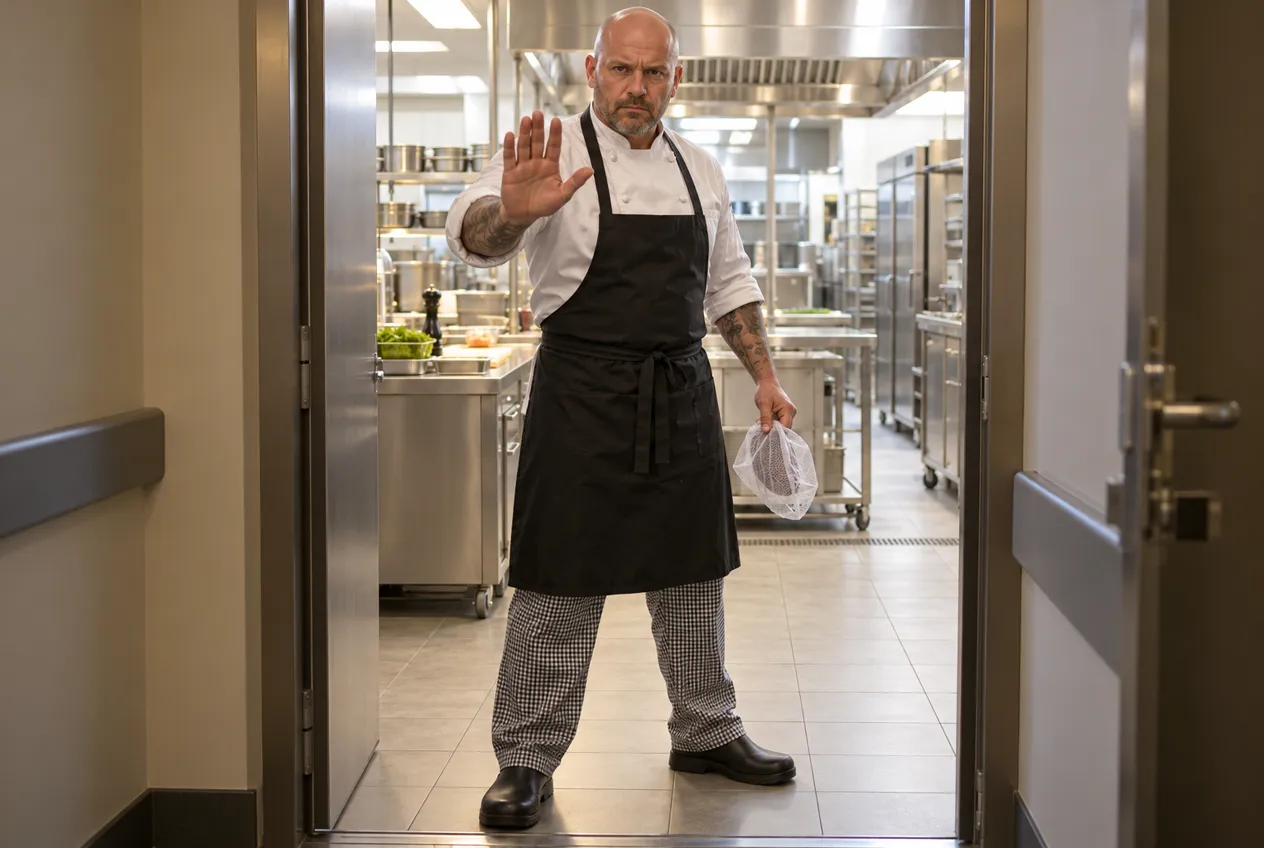
Stefanhead chef Stopp! Ohne Haarnetz kommt bei mir niemand in die Küche.
Stop! Nobody comes into my kitchen without a hairnet.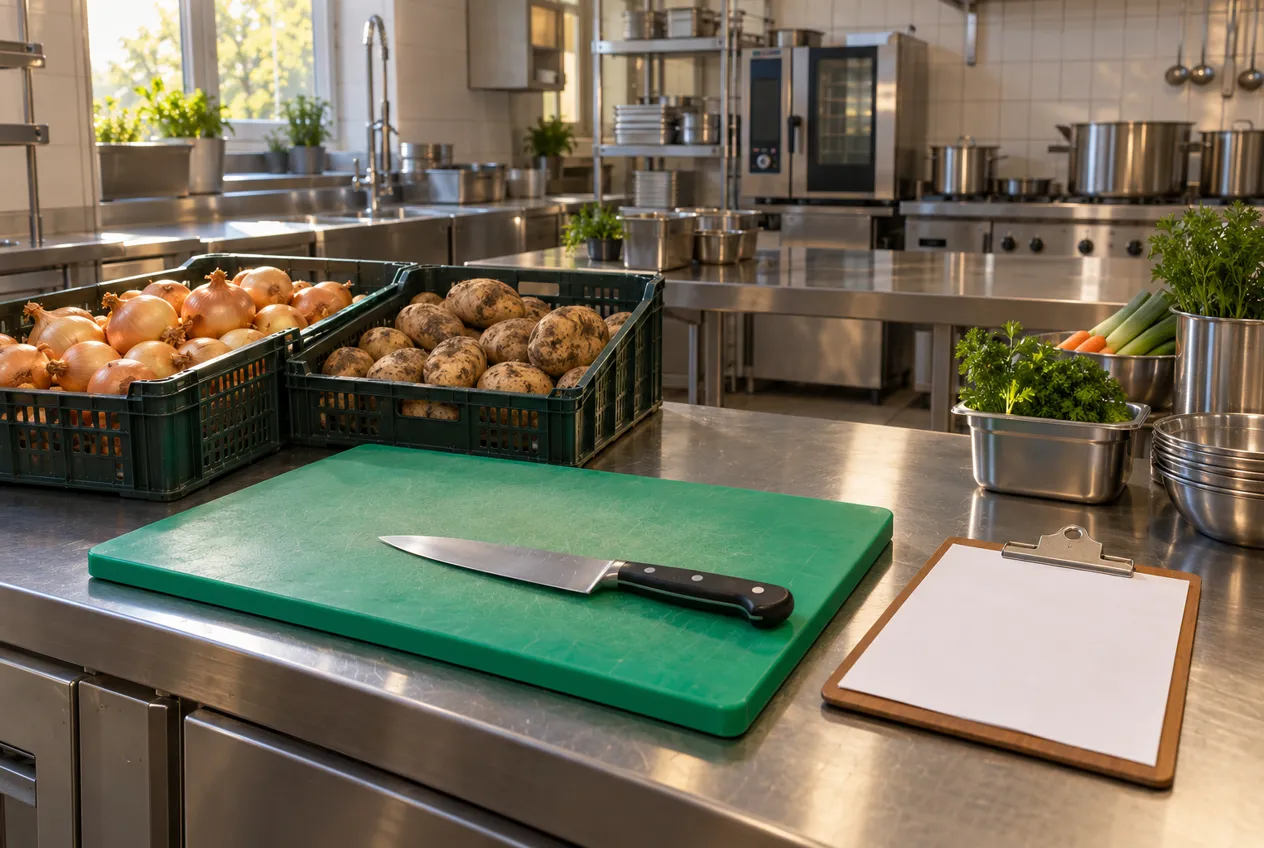
Stefanhead chef Heute kochen wir für achtzig Portionen.
Today we're cooking eighty portions.
Frau Lehmannrestaurant manager Um zwölf Uhr kommen die ersten Gäste.
The first guests arrive at twelve.
What you play in the hospitality placement
Every situation comes from the placement itself: a hotel with its kitchen, restaurant and reception, a team and guests who come back from week to week.
First morning in the kitchen
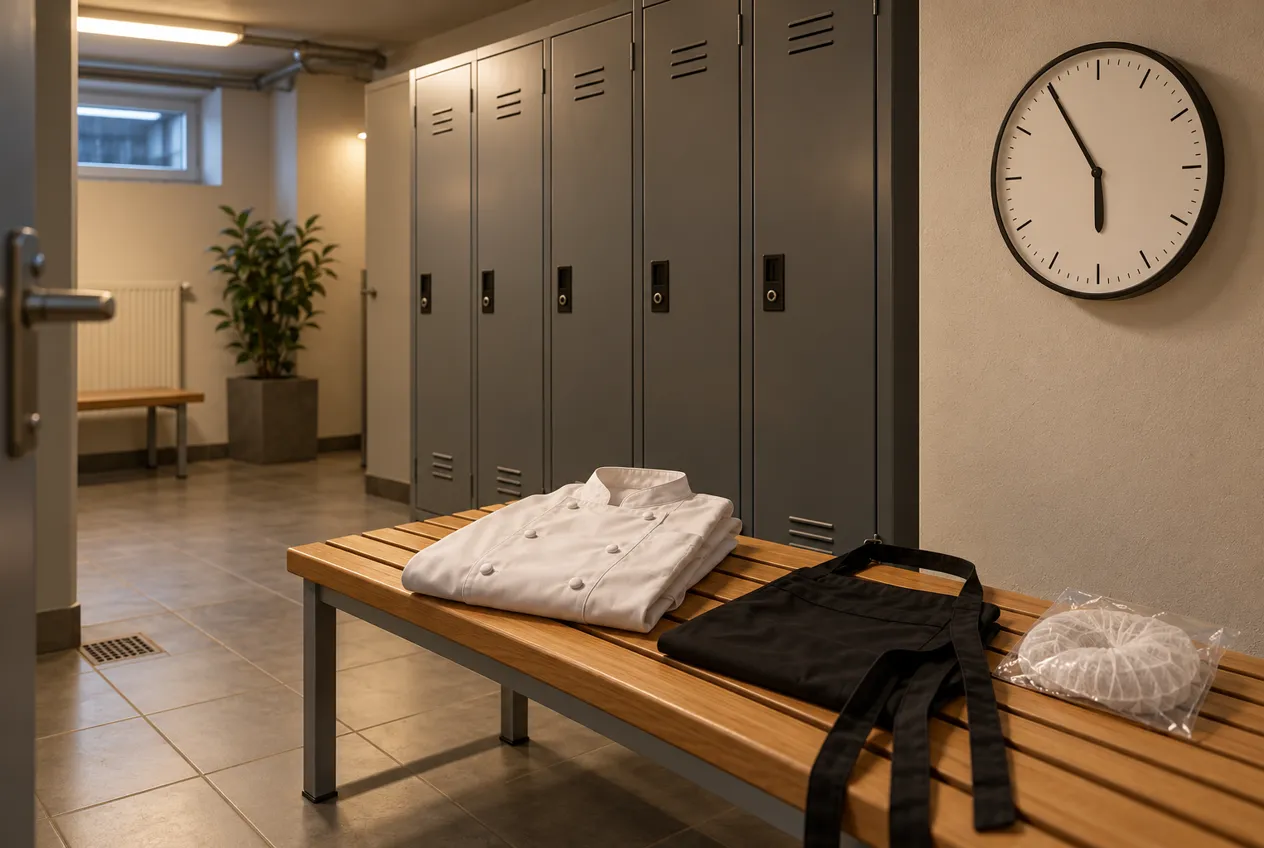
You arrive before six, find your locker and chef's jacket, introduce yourself to the head chef and meet the restaurant manager before breakfast service.
Hygiene and food safety
Washing and disinfecting your hands, wearing a hairnet, checking temperatures in the cold room and spotting goods that are past their date.
Mise en place and table setting
Understanding your prep list at the vegetable station, asking when something is unclear, then laying the tables for a birthday party of forty guests.
Guests in the restaurant and at reception
Advising a businessman in a hurry who has a nut allergy, and checking in a tired mother and her two children on a Friday evening.
Deliveries
Checking a morning delivery of vegetables, dairy and eggs against the delivery note, reporting what is missing or damaged, and signing correctly.
Complaints and rush hour
A guest whose steak arrived cold after a long wait, then a full Saturday night at the pass, with orders piling up and the need to stay calm.
Hospitality in Germany: why the language matters
Hotels and restaurants in Germany often work in mixed teams, and German is part of the job from the first shift: you take instructions in the kitchen, follow hygiene rules, talk to guests and handle complaints. Requirements depend on the employer, the federal state and your situation, so always check the official conditions.
- In the kitchen, short and fast instructions matter: quantities, times, stations
- Hygiene and food safety rules are strict, and you need to understand and repeat them
- In service and at reception you talk to guests all day: advice, allergies, check-in, complaints
- Training places (Ausbildung) in cooking, service and hotel work can be a way in, depending on your profile
Job titles in German
The titles stay in German, as you will read them in job ads.
- Koch/Köchin
- Servicekraft
- Hotelfachmann/-frau
Hospitality vocabulary you practise
The words come back in dialogues, documents and vocabulary podcasts, with their translation in the help language.
The kitchen and the shift
die Kochjackeder Spindder Dienstplandie Schichtdas Kühlhaus
Hygiene
die Hygienedas Haarnetzdie Seifedas Desinfektionsmittelder Handschuh
Temperatures and food safety
die Temperaturkontrolledas Thermometerder Kühlschrankdas Etikettabgelaufen
Prep and table setting
das Rezeptvorbereitenschälenwürfelndas Gedeck
Restaurant and reception
die Speisekartedas Tagesgerichtdie Allergiedie Bestellungdie Zimmerkarte
Deliveries and complaints
der Lieferscheinbeschädigtreklamierendie Beschwerdesich entschuldigen
Your path: 7 weeks from A2 to B2
Each week is a theme of the placement. Recommended start: B1; with A2 you can begin, the first weeks are more guided.
- Week 1First day at workA2
- Week 2Hygiene, HACCP and safety at workA2
- Week 3Mise en place and workflowsB1
- Week 4Welcoming and advising guestsB1
- Week 5Orders and deliveriesB1
- Week 6Complaints and rush hoursB2
- Week 7End-of-placement reviewB2
A learning game, not a real placement
The Praktikum trains the language of the job. It does not replace a placement in a hotel or restaurant.
- No internship agreement and no pay
- No placement with an employer and no job promise
- No help with visas or recognition of qualifications
- The hotel, restaurant, colleagues and guests are fictional
Frequently asked questions
Is this a real placement in a German hotel or restaurant?
No. It is a game for learning the German of hospitality. There is no contract, no pay, no placement with an employer and no visa support.
What level of German do I need to start?
B1 is the recommended start. With A2 you can begin: the first weeks are more guided. The last weeks aim at B2, with complaints and busy service.
How much does it cost?
The Praktikum is free for anyone with an account. Only live speaking scenes with a character in the app use credits.
Does it prepare me for a German exam for work?
It trains similar situations: instructions, talking with guests, complaints, documents. It does not replace practice for the exact format of telc Deutsch B1·B2 Beruf or the Deutsch-Test für den Beruf (DTB).
In which languages are the help and translations?
The placement is played in German. Help and translations are shown in English or French.
Keep going
Your first kitchen shift is waiting
Create your trainee, put on your chef's jacket and play your first day in German.
Play the hospitality placement