Learn workplace German by playing
German for logistics: play your first shifts in a German warehouse
Learn warehouse German by playing. You live a workday in a large warehouse hall, at the loading docks and in the warehouse office, choose what to say to your supervisor, drivers and colleagues, speak when it is your turn, and unlock the next day by finishing the one before.
Free with an account. Only live speaking scenes with a character in the app use credits.
Learn by playing: how the game works
You do not read lessons about logistics, you live the shift. Progress only comes from what you actually play.
Explore the workplace
Move between the warehouse gate, the office, the changing room and the aisles of the hall, and tick off the objectives of the day one by one.
Choose your reply
At each moment you pick what to say or do. Characters react immediately, and a short explanation tells you why a reply works or not.
Trust and evaluation
Two gauges follow your choices: the trust of the driver or customer you deal with, and the evaluation of your shift supervisor. Good reflexes in a row earn a compliment.
Speak when it is your turn
Some scenes ask you to speak: introduce yourself, confirm a quantity, repeat a time on the phone. Live scenes with an in-app character use credits.
A real shift clock
The day runs from the start of the early shift to the handover, with unexpected events: a late truck, a damaged delivery, an urgent order.
Stars and the next day
Finish the day to earn up to three stars and see the words you learned. The next day unlocks only when the previous one is done.
Scenes from the warehouse placement
Real scenes from the first day, with the German line you hear in the game and its translation.
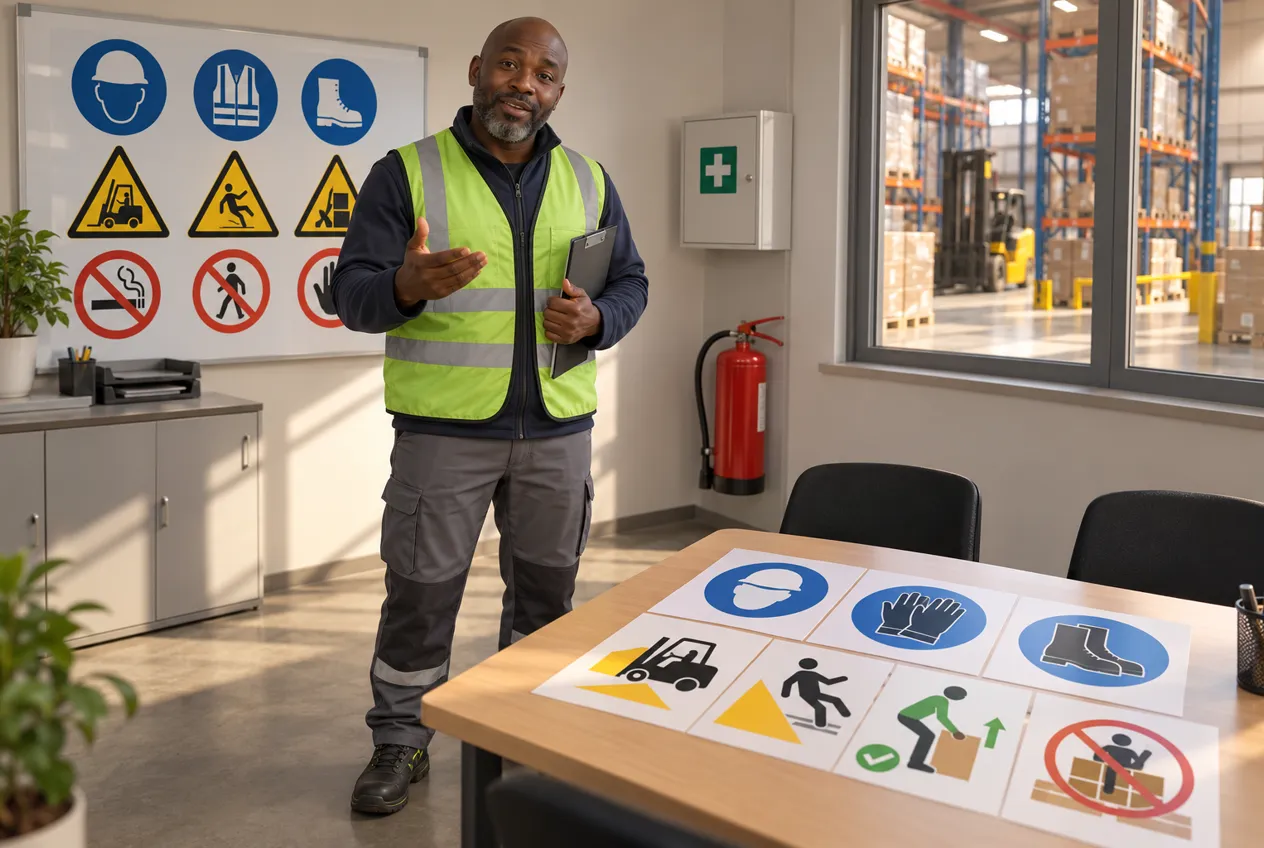
Herr Okaforsafety officer Die gelben Linien sind der Fahrweg für die Gabelstapler.
The yellow lines are the lane for the forklifts.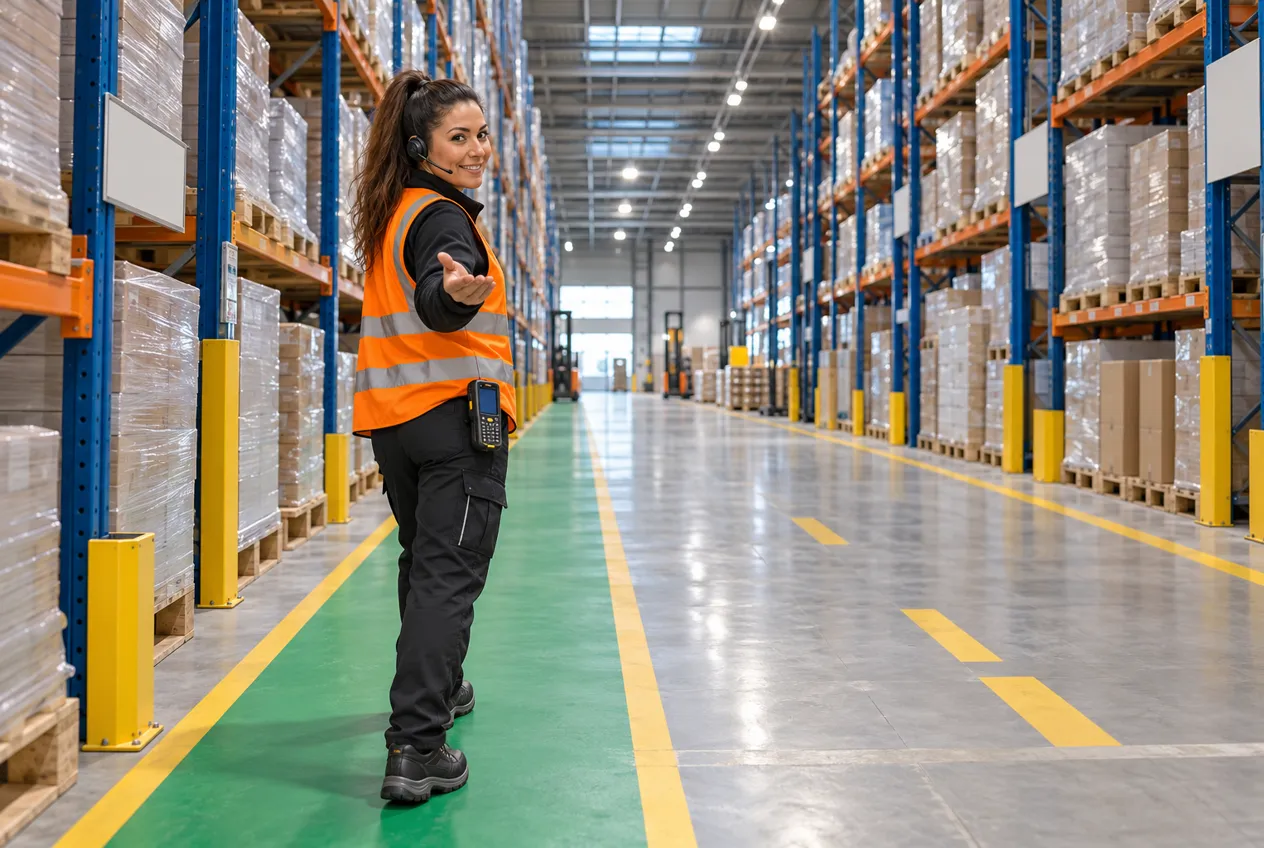
Nicoleshift supervisor Jeder Lagerplatz hat eine Adresse.
Every storage location has an address.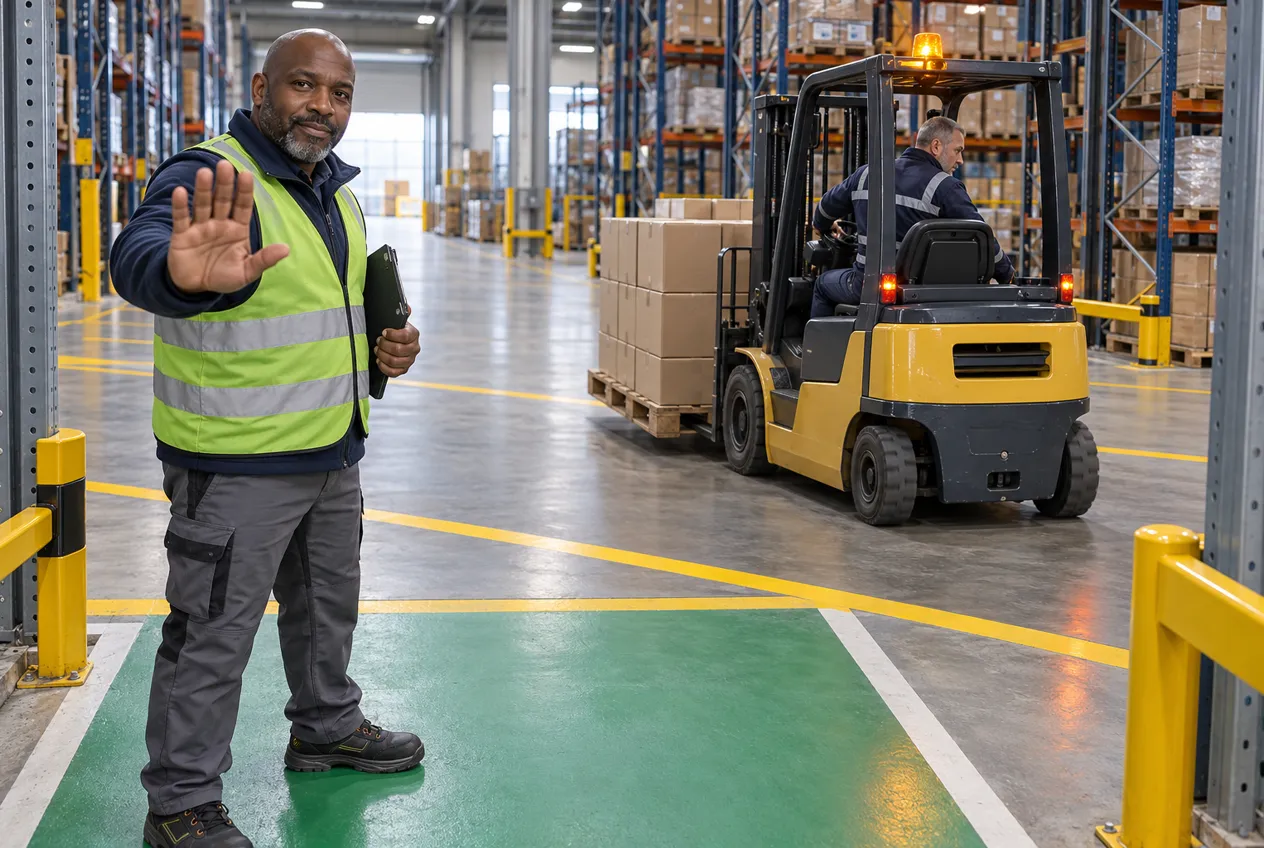
Herr Okaforsafety officer Sehen Sie den Gabelstapler?
Do you see the forklift?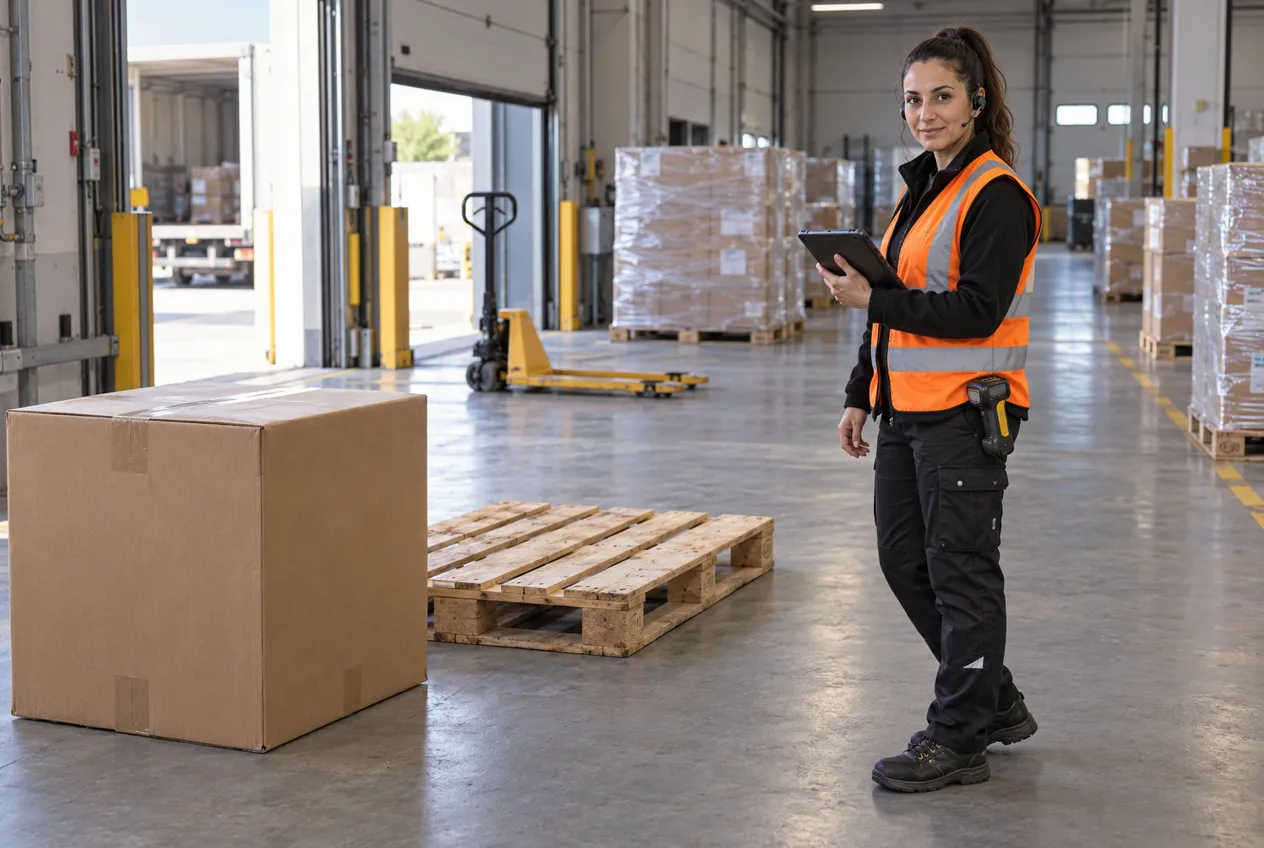
Nicoleshift supervisor Achtung, er wiegt dreißig Kilo.
Careful, it weighs thirty kilos.
What you play in the warehouse placement
Every situation comes from the placement itself: a large warehouse, a team, drivers and customers who come back from week to week.
First shift and a tour of the hall
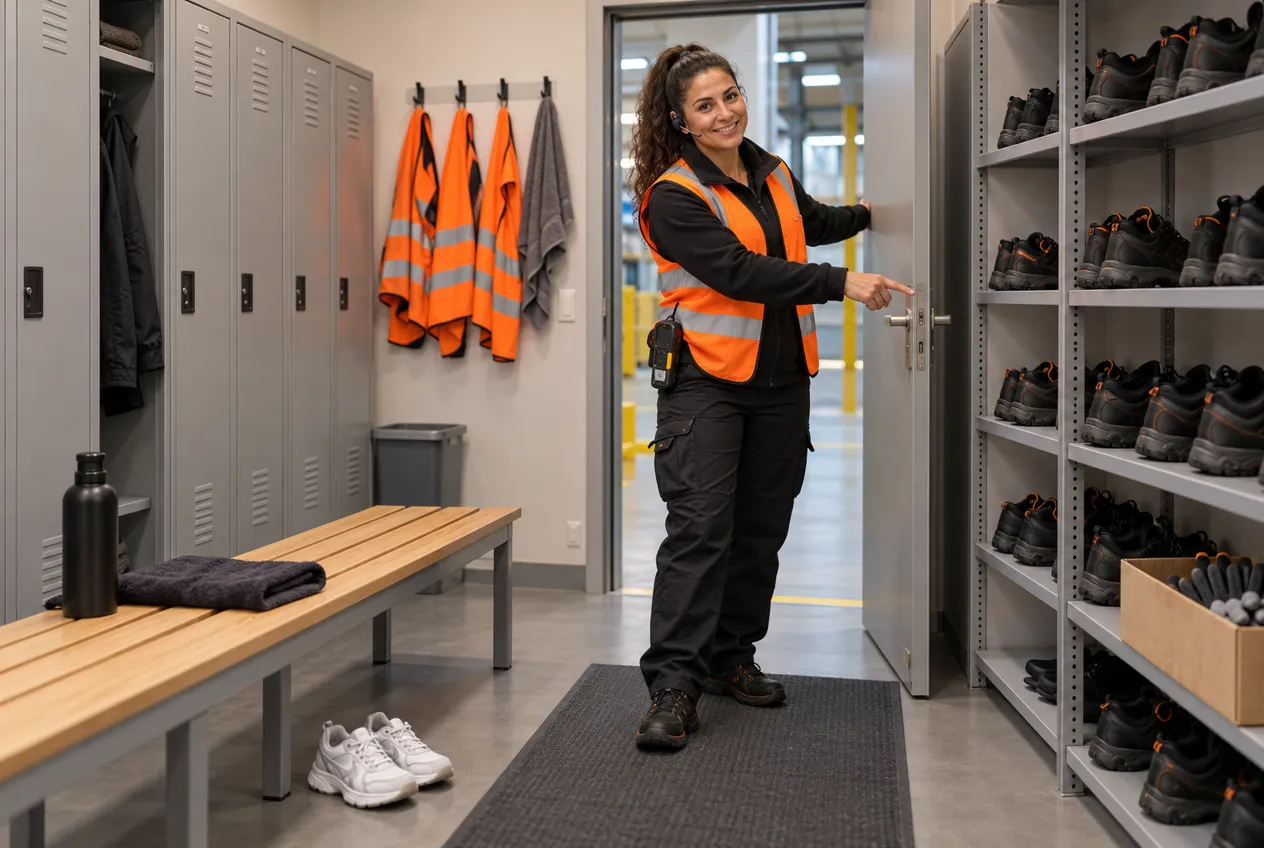
You report to the shift supervisor, collect your safety shoes and vest, and discover goods-in, the docks, the pallets, the racks and the emergency exits.
Safety in the warehouse
Walking only on the footpath, keeping escape routes clear, watching for a reversing forklift and lifting a heavy box the right way, with your knees, not your back.
Goods-in, picking and shipping
Checking a delivery note at the dock before signing, picking your first order alone with the scanner, and preparing a pallet for a truck collection.
Drivers and dispatchers
A truck that arrives an hour late with goods needed urgently, then a call from the haulier's dispatcher: repeat the new arrival time and agree on a slot.
Stocktaking
Counting in aisle C, finding a difference between the list and the shelf, counting again and explaining the gap clearly to your supervisor.
Mistakes and near misses
An angry customer who received the wrong goods, then a pallet that tipped over in aisle D: block the area, report what happened and find the cause.
Warehouse logistics in Germany: why the language matters
Warehouses in Germany often run in shifts with international teams, and German matters from the first day: safety rules, storage locations, delivery notes and phone calls with hauliers. Requirements depend on the employer, the federal state and your situation, so always check the official conditions.
- Safety rules are explained in German: forklift lanes, escape routes, lifting correctly
- Every task depends on exact details: quantities, item numbers, storage locations
- You talk to drivers, dispatchers and your shift supervisor, often under time pressure
- Training places (Ausbildung) in warehouse logistics can be a way in, depending on your profile
Job titles in German
The titles stay in German, as you will read them in job ads.
- Fachkraft für Lagerlogistik
- Fachlagerist/in
Warehouse vocabulary you practise
The words come back in dialogues, documents and vocabulary podcasts, with their translation in the help language.
The warehouse and the shift
das Lagerdie Halledie Schichtdie Warnwestedas Regal
Goods-in
der Wareneingangdie Rampedie Paletteder Lieferscheinentladen
Safety
der Gabelstaplerder Hubwagender Fluchtwegder Notausgangder Feuerlöscher
Picking and shipping
der Kommissionierauftragder Scannerder Lagerplatzder Barcodedie Packliste
Stocktaking
die Inventurdie Differenzdie Zähllistenachzählendie Retoure
Drivers and incidents
die Speditiondas Zeitfensterdie Reklamationdie Falschlieferungder Beinaheunfall
Your path: 7 weeks from A2 to B2
Each week is a theme of the placement. Recommended start: B1; with A2 you can begin, the first weeks are more guided.
- Week 1First day in the warehouseA2
- Week 2Warehouse safetyA2
- Week 3Goods-in, picking and shippingB1
- Week 4Talking with the team and driversB1
- Week 5Delivery notes and stocktakingB1
- Week 6Mistakes, damage and time pressureB2
- Week 7End-of-placement reviewB2
A learning game, not a real placement
The Praktikum trains the language of the job. It does not replace a placement in a warehouse.
- No internship agreement and no pay
- No placement with an employer and no job promise
- No help with visas or recognition of qualifications
- The warehouse, haulier, colleagues and customers are fictional
Frequently asked questions
Is this a real placement in a German warehouse?
No. It is a game for learning the German of warehouse logistics. There is no contract, no pay, no placement with an employer and no visa support.
What level of German do I need to start?
B1 is the recommended start. With A2 you can begin: the first weeks are more guided. The last weeks aim at B2, with mistakes, damage and time pressure.
How much does it cost?
The Praktikum is free for anyone with an account. Only live speaking scenes with a character in the app use credits.
Does it prepare me for a German exam for work?
It trains similar situations: instructions, phone calls, delivery notes, reporting a problem. It does not replace practice for the exact format of telc Deutsch B1·B2 Beruf or the Deutsch-Test für den Beruf (DTB).
In which languages are the help and translations?
The placement is played in German. Help and translations are shown in English or French.
Keep going
Your first shift in the warehouse is waiting
Create your trainee, put on your safety vest and play your first day in German.
Play the warehouse placement