Learn workplace German by playing
German for medical assistants: play your first days in a German GP practice
Learn medical German by playing. You work at the reception desk, in the lab and in the treatment room of a family doctor's practice, choose what to say to patients and the doctor, speak when it is your turn, and unlock the next day by finishing the one before.
Free with an account. Only live speaking scenes with a character in the app use credits.

Learn by playing: how the game works
You do not read lessons about the practice, you live the working day. Progress only comes from what you actually play.
Explore the practice
Move between the entrance, the changing room, reception, the waiting room, the lab and the treatment room, and tick off the objectives of the day one by one.
Choose your reply
At each moment you pick what to say or do. Characters react immediately, and a short explanation tells you why a reply works or not.
Trust and evaluation
Two gauges follow your choices: the trust of the patient in front of you, and the evaluation of the doctor. Good reflexes in a row earn a compliment.
Speak when it is your turn
Some scenes ask you to speak: greet a patient, ask for a date of birth, repeat an instruction. Live scenes with an in-app character use credits.
A real practice clock
The day runs from opening to the end of surgery hours, with unexpected events: a ringing phone, a patient without an appointment, someone who will not wait.
Stars and the next day
Finish the day to earn up to three stars and see the words you learned. The next day unlocks only when the previous one is done.
Scenes from the medical practice placement
Real scenes from the first day, with the German line you hear in the game and its translation.

Dr. EngelhardtGP, runs the practice Die Sprechstunde beginnt um acht Uhr.
Surgery hours start at eight o'clock.
Dr. EngelhardtGP, runs the practice Das ist die Anmeldung.
This is reception.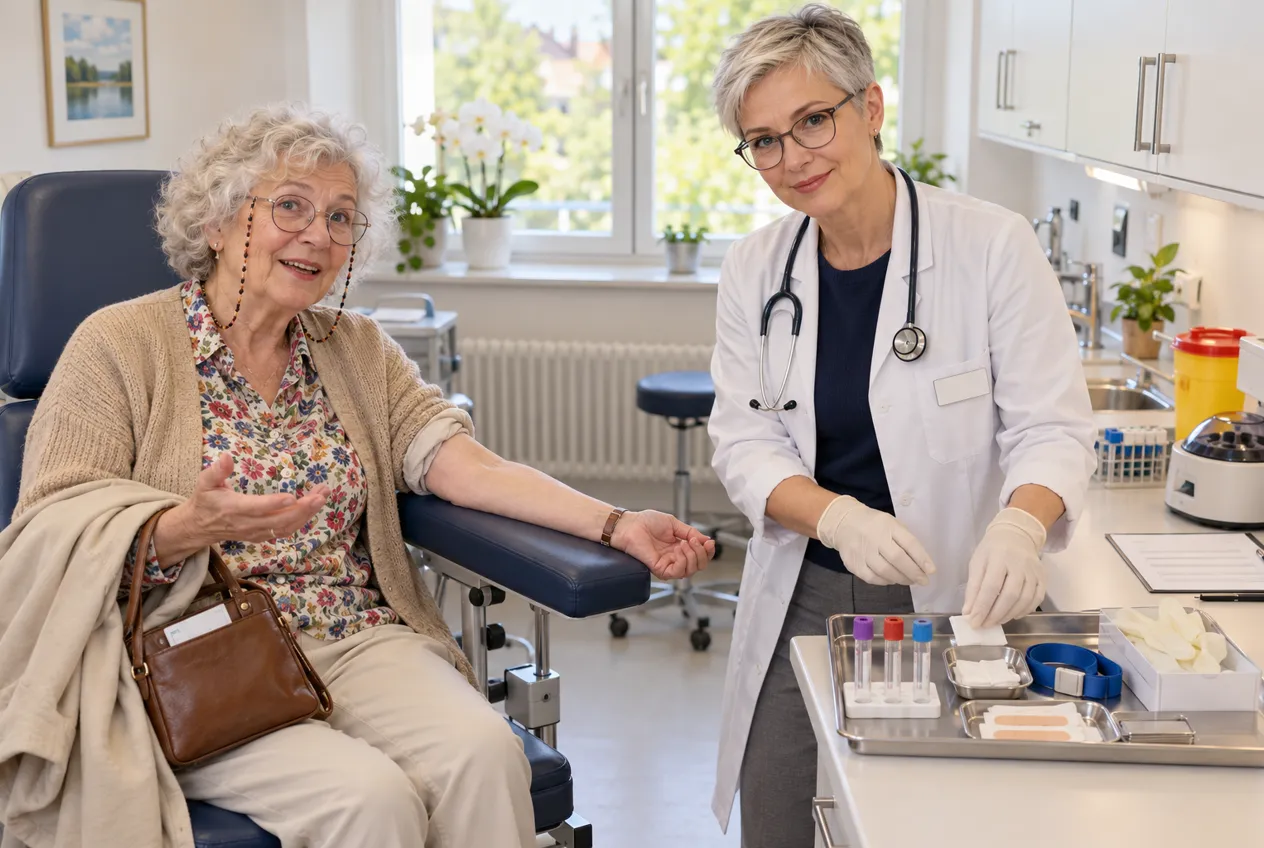
Dr. EngelhardtGP, runs the practice Bevor wir anfangen, fragen wir immer nach dem Namen und dem Geburtsdatum.
Before we start, we always ask for the name and the date of birth.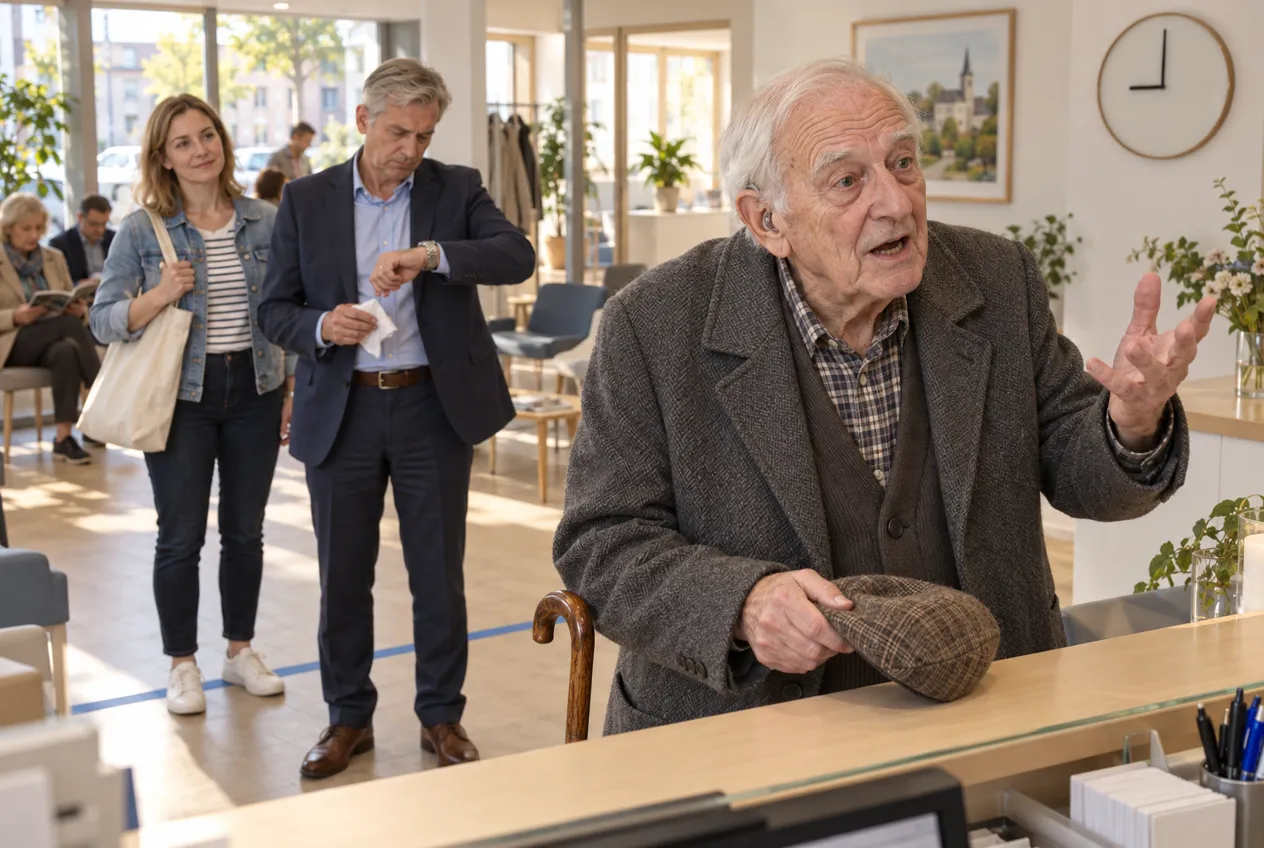
Herr Brandtpatient, hard of hearing Ich brauche ein neues Rezept für meine Tabletten!
I need a new prescription for my tablets!
What you play in the medical practice placement
Every situation comes from the placement itself: a family doctor's practice, the doctor who runs it, and patients you meet again from week to week.
First morning at the practice
You arrive before surgery hours, introduce yourself to the doctor, collect your white coat and learn your tasks at reception.
Reception and insurance cards
Greeting the first patient of the day, reading in her insurance card and sending her to the waiting room for a fasting blood test.
Hygiene and confidentiality
Preparing the treatment room for the next patient, and serving a hard-of-hearing man discreetly while others queue behind him.
Appointments and phone calls
Booking a check-up and a vaccination for a new patient, fitting in someone with acute back pain, and taking a call about fever and cough without making a diagnosis.
Prescriptions and referrals
After surgery hours the doctor gives you three tasks: a repeat prescription, a referral and a sick note. You write them down, repeat them and ask what is unclear.
Difficult patients and emergencies
Calming a patient who has waited almost an hour, then acting fast when an elderly man in the waiting room turns pale and dizzy.
Medical assistants in Germany: German at the front desk
In a German doctor's practice, the medical assistant is often the first person patients speak to: on the phone, at reception, before a blood test. You need clear, polite and discreet German every minute of the day. Requirements depend on the employer, the federal state and whether your qualification is recognised, so check the official conditions for your situation.
- A good working level of German, often around B1–B2, is usually expected because you deal with patients all day
- The job mixes everyday German (greeting, appointments, phone calls) with medical terms (blood tests, prescriptions, referrals)
- Confidentiality and data protection are part of every conversation at the counter
- The training (Ausbildung) to become a medical assistant can be a way in, depending on your background
Job title in German
The title stays in German, as you will read it in job ads.
- Medizinische/r Fachangestellte/r (MFA)
Medical practice vocabulary you practise
The words come back in dialogues, documents and vocabulary podcasts, with their translation in the help language.
The practice and reception
die Praxisdie Anmeldungdas Wartezimmerdie Versichertenkarteeinlesen
Hygiene
die Händedesinfektiondas Desinfektionsmittelder Handschuhdie Kanüleder Abwurfbehälter
The lab and blood tests
die Blutabnahmedas Röhrchendas Etikettnüchterndas Ergebnis
Appointments and the phone
der Terminvereinbarendie Beschwerdendringenddie Vorsorgeuntersuchung
Prescriptions and paperwork
das Folgerezeptdas E-Rezeptdie Dosierungdie Überweisungdie Krankschreibung
Talking with patients
die Schweigepflichtdiskretdie Wartezeitsich entschuldigendie Lösung
Your path: 7 weeks from A2 to B2
Each week is a theme of the placement. Recommended start: B1; with A2 you can begin, the first weeks are more guided.
- Week 1First day at the practiceA2
- Week 2Hygiene and data protectionA2
- Week 3Reception, appointments and routinesB1
- Week 4Patients on the phone and at receptionB1
- Week 5Prescriptions, referrals and recordsB1
- Week 6Emergencies and difficult patientsB2
- Week 7End-of-placement reviewB2
A learning game, not a real placement
The Praktikum trains the language of the job. It does not replace a placement in a real doctor's practice.
- No internship agreement and no pay
- No placement with a practice and no job promise
- No help with visas or recognition of qualifications
- The practice, the doctor, colleagues and patients are fictional
Frequently asked questions
Is this a real placement in a German doctor's practice?
No. It is a game for learning the German used by medical assistants. There is no contract, no pay, no placement with a practice and no visa support.
What level of German do I need to start?
B1 is the recommended start. With A2 you can begin: the first weeks are more guided. The last weeks aim at B2.
How much does it cost?
The Praktikum is free for anyone with an account. Only live speaking scenes with a character in the app use credits.
Does it prepare me for a job-related German exam?
It trains similar situations: phone calls, appointments, explaining procedures, handling complaints. It does not replace practice for the exact format of telc Deutsch B1·B2 Beruf or the Deutsch-Test für den Beruf (DTB).
In which languages are the help and translations?
The placement is played in German. Help and translations are shown in English or French.
Keep going
Your first morning at the practice is waiting
Create your trainee, put on your white coat and play your first day at reception in German.
Play the medical practice placement