Learn workplace German by playing
German for nursing: play your first shifts on a German ward
Learn care German by playing. You live a workday in a care home and on a hospital ward, choose what to say to residents, patients and colleagues, speak when it is your turn, and unlock the next day by finishing the one before.
Free with an account. Only live speaking scenes with a character in the app use credits.
Learn by playing: how the game works
You do not read lessons about nursing, you live the shift. Progress only comes from what you actually play.
Explore the workplace
Move between the entrance, the changing room, the nurses' station and the residents' rooms, and tick off the objectives of the day one by one.
Choose your reply
At each moment you pick what to say or do. Characters react immediately, and a short explanation tells you why a reply works or not.
Trust and evaluation
Two gauges follow your choices: the trust of the resident or patient, and the evaluation of your ward manager. Good reflexes in a row earn a compliment.
Speak when it is your turn
Some scenes ask you to speak: introduce yourself, ask a question, report a value. Live scenes with an in-app character use credits.
A real shift clock
The day runs from the early shift to the end of duty, with unexpected events: a call bell, an urgent request, a resident who will not wait.
Stars and the next day
Finish the day to earn up to three stars and see the words you learned. The next day unlocks only when the previous one is done.
Scenes from the nursing placement
Real scenes from the first day, with the German line you hear in the game and its translation.
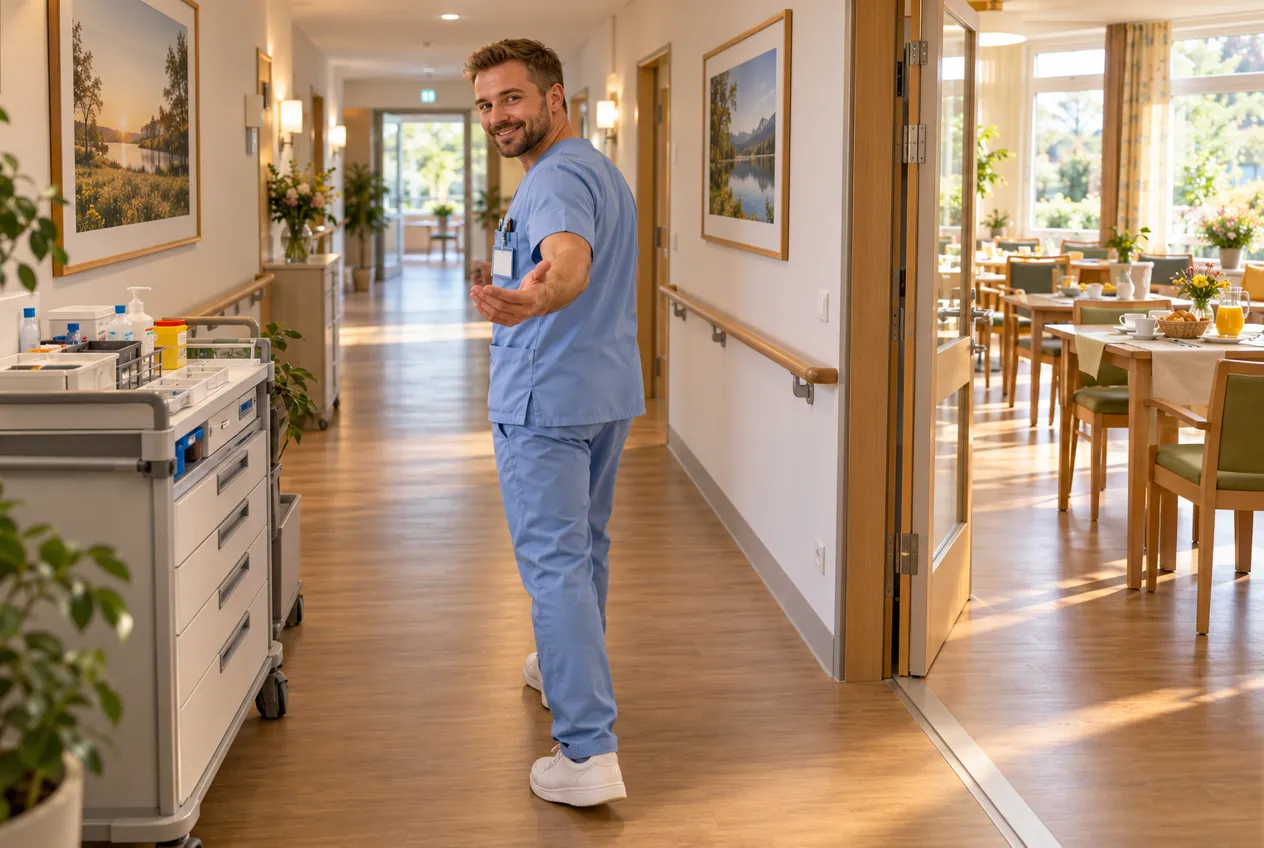
Tobiasnurse and your mentor Der Frühdienst beginnt um sechs Uhr.
The early shift starts at six o'clock.
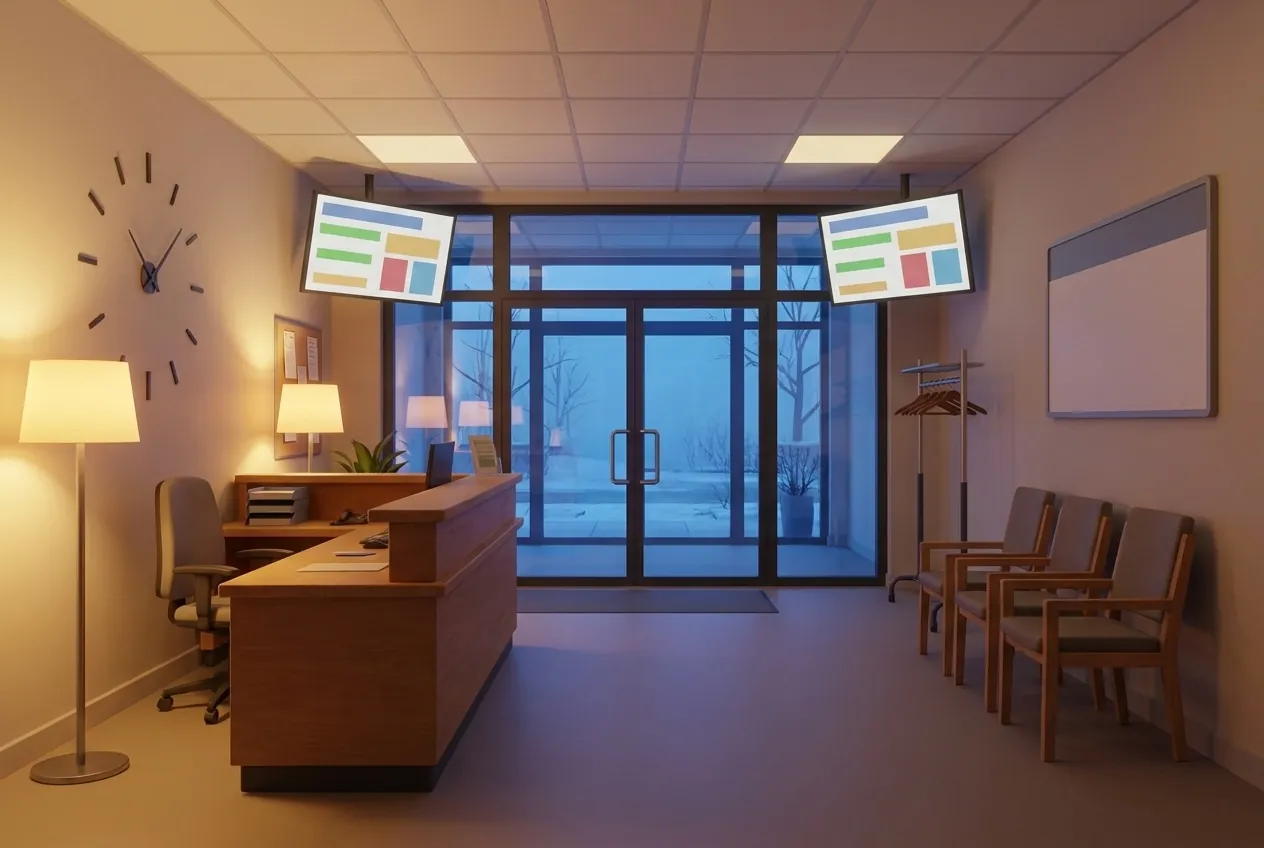
Frau Sommerfeldward manager Wir haben heute Verstärkung im Team. Herzlich willkommen!
We have a new pair of hands on the team today. Welcome!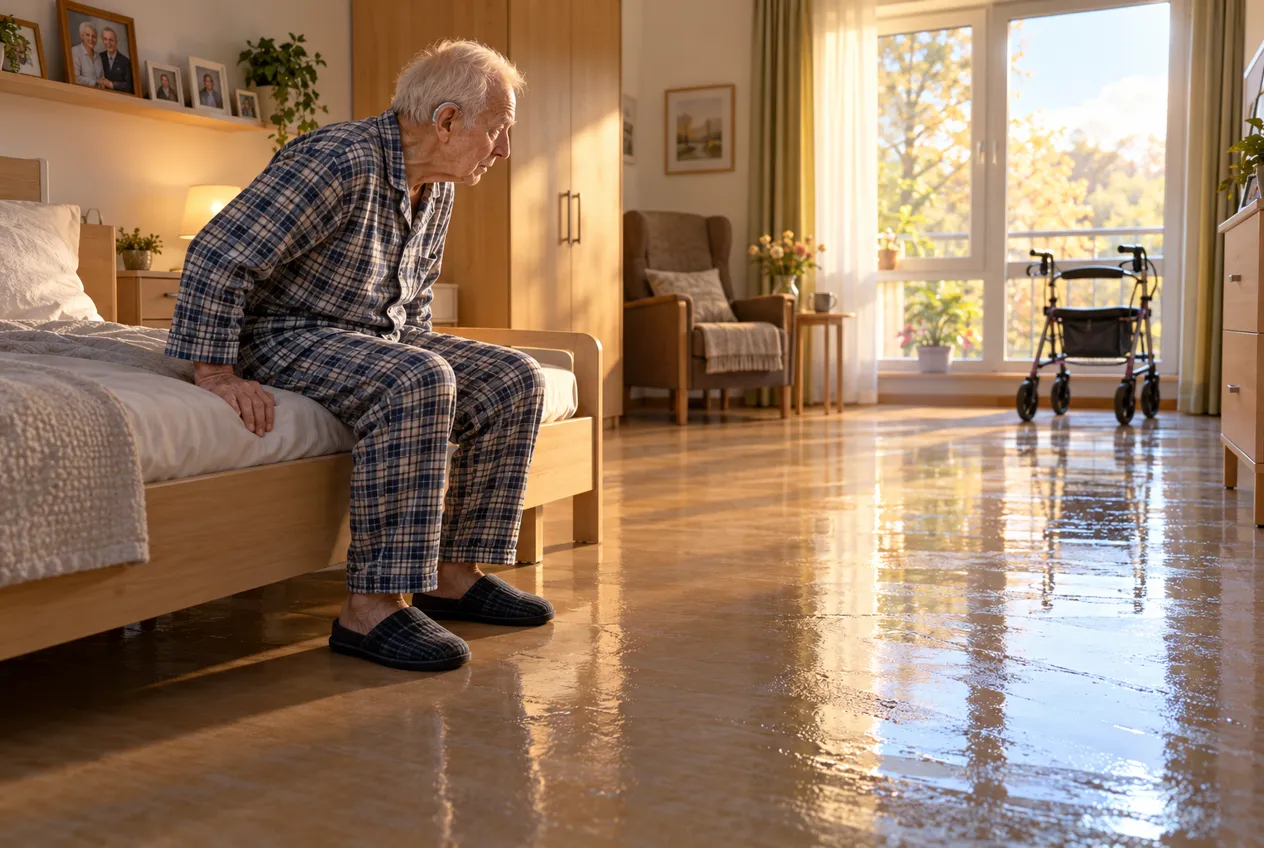
Herr Brandtresident, at risk of falling Ich muss dringend zur Toilette.
I urgently need to go to the toilet.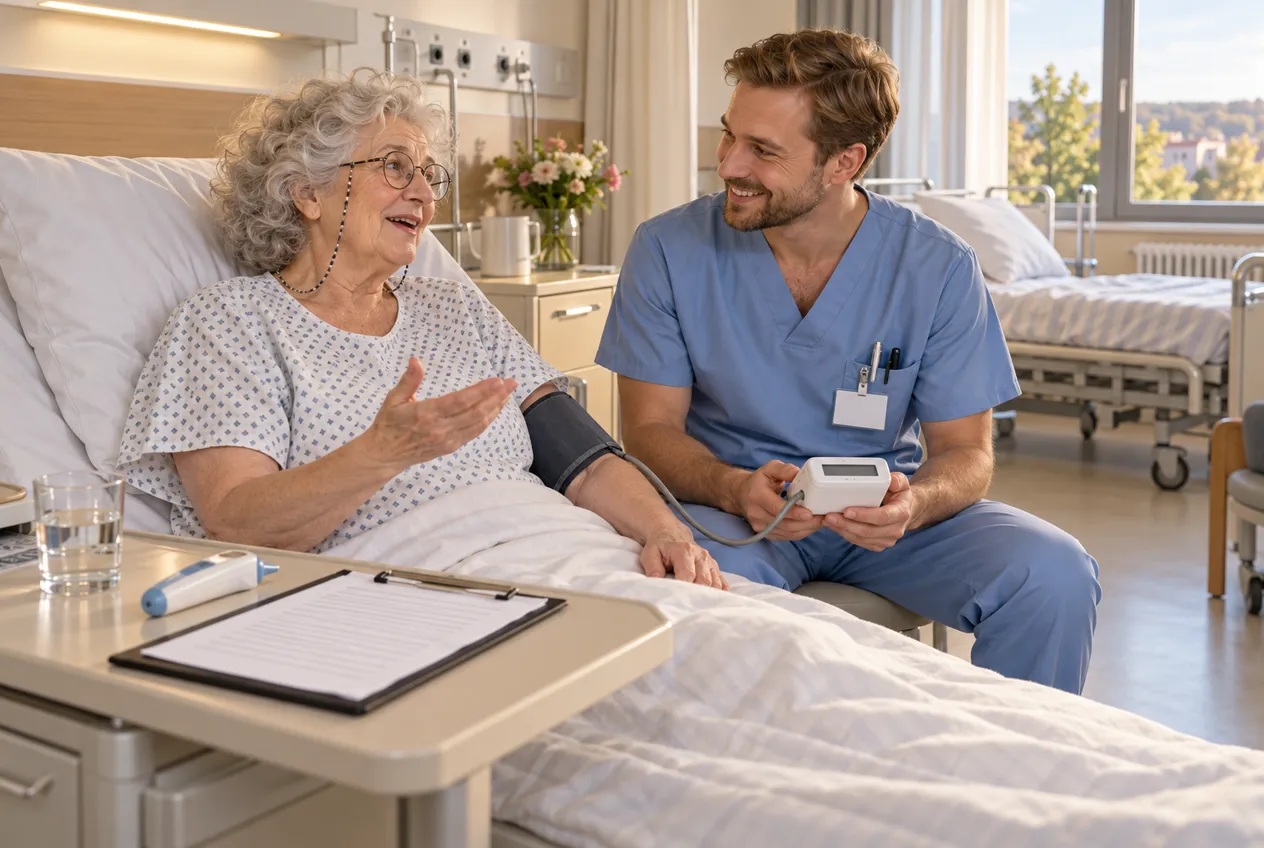
Tobiasnurse and your mentor Wir messen jetzt Ihre Vitalzeichen.
We're going to take your vital signs now.
What you play in the nursing placement
Every situation comes from the placement itself: a care home and a hospital ward, a team, residents and patients who come back from week to week.
First early shift and handover
You arrive at a quarter to six, report to the ward manager, get your uniform and listen to the morning handover: who is at risk of falling, whose blood pressure was too high.
Hygiene and fall prevention
Hand disinfection, gloves, used needles, and a resident who wants to walk to the toilet alone while the floor is wet and his walker is out of reach.
Vital signs and basic care
Taking blood pressure, pulse and temperature, explaining the values calmly, helping with personal care while keeping the person as independent as possible.
Residents and relatives
Encouraging a resident with no appetite, calming a worried daughter in the corridor while respecting confidentiality, and fetching the right person.
Care notes and handover to the late shift
Filling in the fluid chart and vital signs, then giving a structured handover for two patients at the change of shift.
Emergencies
After a fall: reassure, do not lift alone, call for help, observe. Then a short, precise phone call to the doctor on duty, repeating the instruction.
Nursing in Germany: why the language matters so much
Care homes and hospitals in Germany recruit care staff from abroad, and German is part of the job from day one: you talk to residents, reassure relatives, take part in handovers and write care notes. Requirements depend on the employer, the federal state and the recognition procedure, so always check the official conditions for your own situation.
- Language level B1–B2 is commonly expected for nursing roles; recognition procedures often ask for a certificate
- Daily work mixes everyday German (residents, families) with technical terms (vital signs, handover, documentation)
- Shifts are organised as early, late and night duty, with a handover at every change
- Care assistant roles and training places (Ausbildung) can be a way in, depending on your qualifications
Job titles in German
The titles stay in German, as you will read them in job ads.
- Pflegefachkraft
- Pflegehelfer/in
- Altenpfleger/in
Nursing vocabulary you practise
The words come back in dialogues, documents and vocabulary podcasts, with their translation in the help language.
The ward and the shift
die Stationder Frühdienstdie Schichtdie Übergabedas Stationszimmer
Hygiene and safety
das Desinfektionsmittelder Handschuhdie Kanüleder Rollatordas Bettgitter
Vital signs
der Blutdruckder Pulsdie Temperaturdas Fiebermessen
Basic care
waschenselbstständigdie Hautdas Druckgeschwürdie Trinkmenge
Documentation
das Trinkprotokolldokumentierender Zustanddie Anordnungdas Sturzprotokoll
Talking with people
die Sorgedie Schweigepflichtdie Geduldder Besuchberuhigen
Your path: 7 weeks from A2 to B2
Each week is a theme of the placement. Recommended start: B1; with A2 you can begin, the first weeks are more guided.
- Week 1First day on the wardA2
- Week 2Hygiene and safetyA2
- Week 3Basic care routinesB1
- Week 4Talking with patients and relativesB1
- Week 5Care records and handoverB1
- Week 6Difficult situations and emergenciesB2
- Week 7End-of-placement reviewB2
A learning game, not a real placement
The Praktikum trains the language of the job. It does not replace a placement in a care facility.
- No internship agreement and no pay
- No placement with an employer and no job promise
- No help with visas or recognition of qualifications
- The care home, hospital, colleagues and residents are fictional
Frequently asked questions
Is this a real nursing placement in Germany?
No. It is a game for learning the German of nursing. There is no contract, no pay, no placement with an employer and no visa support.
What level of German do I need to start?
B1 is the recommended start. With A2 you can begin: the first weeks are more guided. The last weeks aim at B2, the level often asked for in nursing.
How much does it cost?
The Praktikum is free for anyone with an account. Only live speaking scenes with a character in the app use credits.
Does it prepare me for the telc nursing exam?
It trains the same kind of situations: handover, talking with patients, care notes. For the exact exam format, also use the telc B1·B2 Pflege practice.
In which languages are the help and translations?
The placement is played in German. Help and translations are shown in English or French.
Keep going
Your first early shift is waiting
Create your trainee, step onto the ward and play your first day in German.
Play the nursing placement